Growing
Pomegranate: Advanced Cultivation, Processing, and Use Guide
Advanced guide to pomegranate cultivation covering precise growing parameters, propagation from cuttings, harvest optimization, post-harvest processing.
On this page
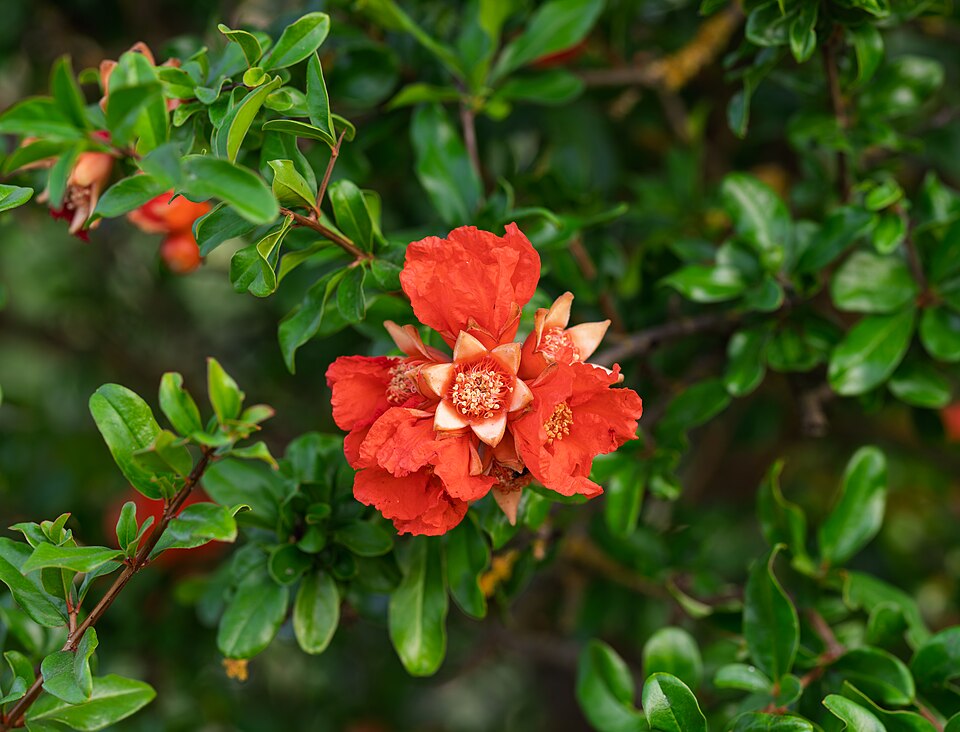
Punica granatum is a long-lived deciduous to semi-evergreen fruiting shrub or small tree, typically reaching 10–20 feet (3–6 m) in height, with multiple trunks, angular branching, and glossy, narrow leaves measuring 2–8 cm in length. The plant produces striking red to orange flowers with a thick, waxy calyx, which later hardens into the leathery rind that characterizes the mature fruit.
In modern contexts, pomegranate is cultivated for fresh consumption, juice production, nutraceutical extracts, cosmetic ingredients, fermentation substrates, and ornamental landscaping. Its value lies primarily in its dense polyphenolic profile, particularly ellagitannins (punicalagins), anthocyanins, and flavonols, which are widely studied for their interaction with oxidative stress pathways, endothelial signaling, lipid metabolism, and gut-microbiota-mediated metabolite production.
Metabolite Pathways
According to peer-reviewed literature, pomegranate polyphenols are not absorbed intact in large quantities; instead, they are metabolized by intestinal microbiota into urolithins, compounds that interact with mitochondrial signaling, inflammatory cascades, and cellular stress responses. These interactions are discussed in the context of general wellness, aging biology, and metabolic resilience without making disease claims.