Plants
Passionflower
Complete passionflower (Passiflora incarnata) monograph: origin and history, active compounds, cultivation, harvest and processing, and extraction.
On this page
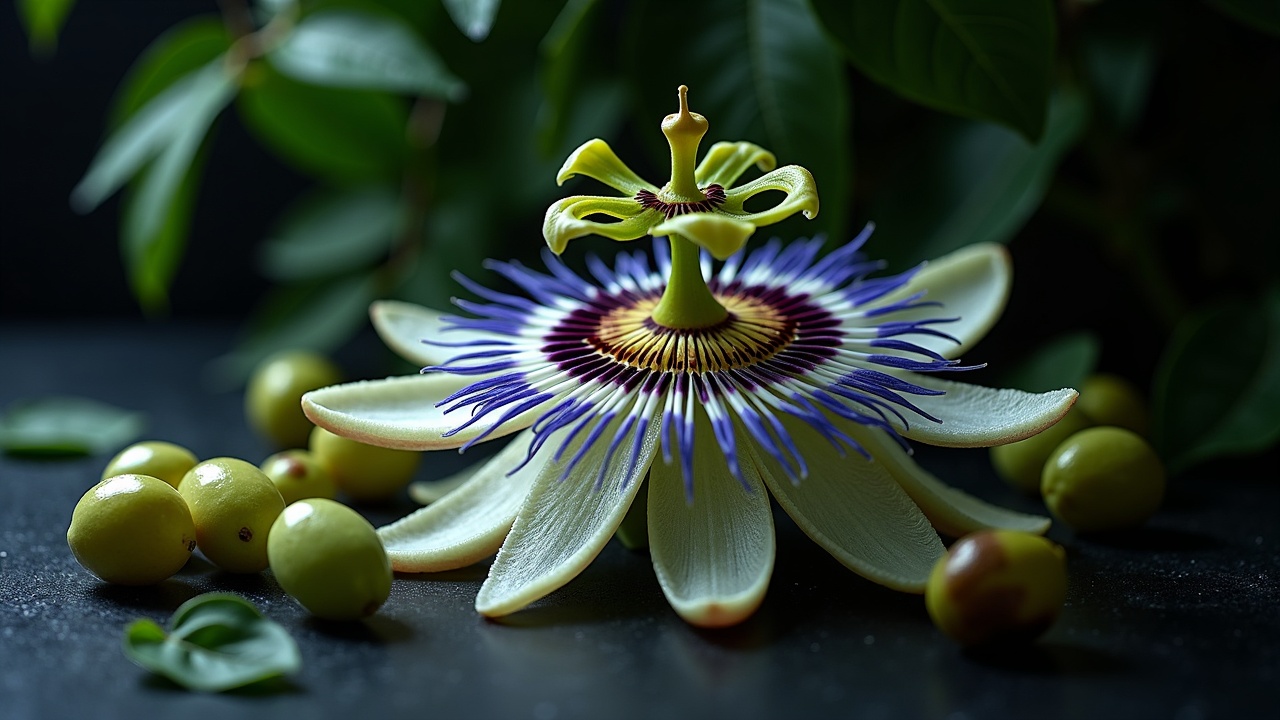
Passiflora incarnata is one of the few truly cold-hardy members of a genus that is otherwise predominantly tropical. It grows wild from Virginia and Kansas south through the entire American Southeast and into Texas, colonizing disturbed roadsides, fence lines, and open woodland edges throughout a substantial portion of the country. This wide native distribution and extreme adaptability make it the most accessible native medicinal vine for American growers, and particularly for Hill Country growers where it thrives in disturbed soils along rural roads, fence lines, and creek margins without any cultivation.
Multiple Indigenous North American nations documented medicinal use of passionflower before European contact. The Cherokee used the root as a tonic and the leaves as a poultice; the Houma used leaf tea for nervousness; the Natchez used it for sleeplessness; the Delaware used the root for treating ear complaints and the leaf as a liver tonic. These uses were systematic parts of established botanical medicine traditions documented across a wide geographic range before and during European contact.
Spanish missionaries in South America encountered related tropical Passiflora species in the 16th century and gave the flower its common name based on their interpretation of the flower's complex anatomy as representing the Passion of Christ. European colonists in North America adopted P. incarnata into domestic practice within a generation of settlement, and the plant entered European herbal commerce in the 17th century. It appeared in the U.S. National Formulary from 1916 to 1936, a period of mainstream medical acceptance. Its removal corresponded with the rise of synthetic sedative drugs rather than with any finding of inefficacy.