Plants
How to Make a Elderberry Extract: Methods, Solvents and Shelf Life
Which parts of elderberry to use, which method pulls out its compounds, the solvent and ratio, safety and how long the extract keeps.
On this page
What are you extracting from elderberry?
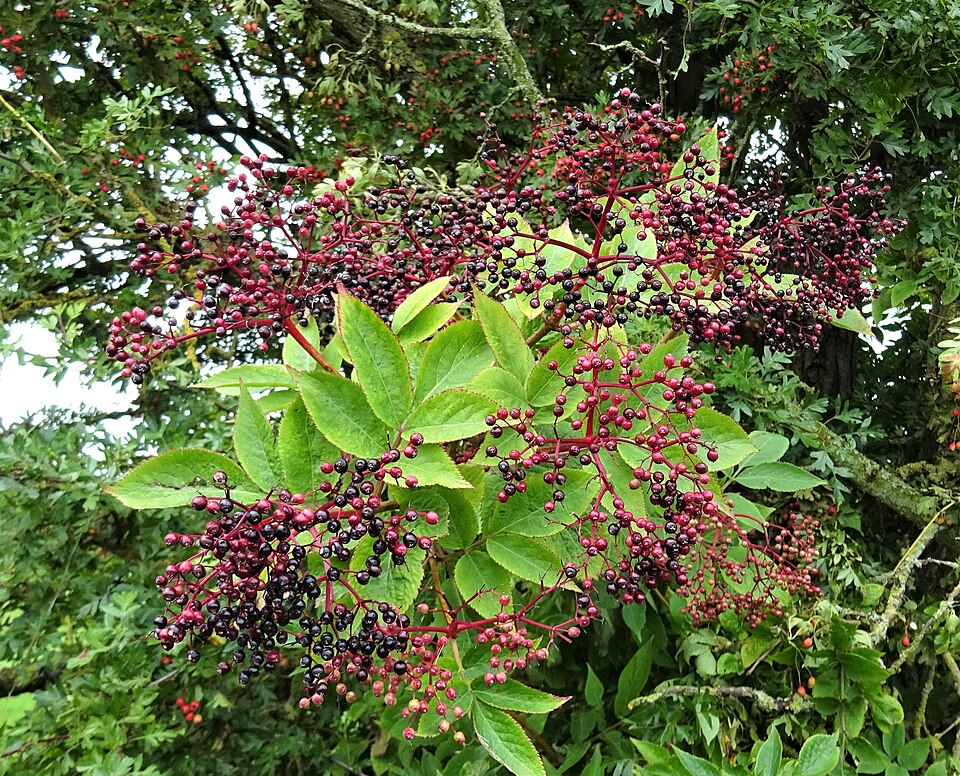
Elderberry extractions focus on cyanidin-3-glucoside and cyanidin-3-sambubioside, anthocyanins within the skin and pulp. These compounds interact with complex systems involving cytokine signaling, gut metabolites, intestinal microbiota, and cellular redox processes. Extraction efficiency is key; a hot-water decoction at 80-90°C efficiently retrieves these while simultaneously addressing heat-labile cyanogenic glycosides present in raw plant material. Processing method significantly impacts the final product.
The choice of solvent determines what else comes along with those target compounds. Ethanol, diluted to various percentages with distilled water, is a versatile option. A 60-70% ethanol solution would be suitable for extracting alkaloids, glycosides and bitters, while 40-50% ethanol targets flavonoids, phenolics, and general purpose herbs. For a broader extraction profile, consider [ethanol tincture] methods. Lower percentages like 25-30% are better suited to tannins, saponins, and mucilage, though these will yield less of the anthocyanins.
Food-grade ethanol is essential; avoid denatured alcohol due to toxic additives. Everclear or organic grape alcohol can be diluted from a starting point of 90-95% ethanol. Glycerin offers an alcohol-free alternative with [glycerin extraction], using a typical ratio of 60% glycerin / 40% water, but results in lower potency and shorter shelf life. Vinegar extracts minerals and some alkaloids, suitable for herbs like nettles, though not a general replacement.
Regardless of solvent choice, fresh elderberries are highly perishable. Proper [drying herbs] is essential before extraction to preserve quality. Following extraction, [filtering and clarifying extracts] removes particulate matter. Finally, proper [storing extracts] in airtight containers protects against degradation, with alcohol tinctures lasting 5+ years.
Which extraction method suits elderberry, and why?
Elderberry’s key compounds, cyanidin-3-glucoside and cyanidin-3-sambubioside, are anthocyanins that respond to processing. Hot-water decoction at 80-90°C efficiently extracts these while also addressing heat-labile cyanogenic glycosides present in raw tissues. This suggests water extraction and decoction is a viable starting point, but doesn’t fully leverage the plant's chemistry.
Considering polarity, elderberry contains flavonoids and phenolics - compounds best suited to an ethanol percentage between 40-50% with water comprising 50-60%. This aligns with general-purpose herb extraction. An ethanol tincture offers a balance of solubility and preservation. The monograph highlights that processing method matters, so the initial hot water step remains crucial before solvent addition.
Glycerin (glycerin extraction) is unsuitable as a direct replacement; it yields lower potency and has a shorter shelf life (1-2 years) compared to alcohol’s 5+ years. Apple cider vinegar isn't appropriate for broad spectrum extraction, though useful for mineral-rich herbs. CO2 extraction (CO2 extraction) is possible but requires specialized equipment and expertise.
The United States Pharmacopeia standardized tincture production for 140 years, emphasizing precision. While the folk method has its place, a carefully controlled ethanol extraction using food-grade ethanol, diluted to target percentages with distilled water, will yield a consistent product. Using Everclear (190 proof / 95% ethanol) or organic grape alcohol (190 proof) as a base allows for precise dilution. Vodka (40% ethanol / 80 proof) is too weak for optimal extraction of all desired compounds.
What solvent and ratio should you use for elderberry?
Elderberry extractions benefit from careful solvent selection based on desired compounds. The key mechanism in elderberry involves cyanidin-3-glucoside and cyanidin-3-sambubioside, anthocyanins that interact with complex systems. These are best captured using an ethanol [ethanol extraction] approach.
Given the presence of heat-labile cyanogenic glycosides requiring processing to ensure safety, a hot-water decoction at 80-90°C is essential prior to solvent work. This step denatures unsafe compounds while efficiently extracting those target anthocyanins.
For elderberry, a 40-50% ethanol solution with 50-60% water is appropriate for general-purpose extraction of flavonoids and phenolics. This ratio balances effective compound capture with safety and stability. Use food-grade ethanol only; avoid denatured alcohol. Dilute higher proof ethanol, like Everclear (190 proof / 95% ethanol) or organic grape alcohol, with distilled water to reach the target percentage.
Vodka, at 40% ethanol, is inadequate for a full extraction of elderberry’s constituents. Glycerin [glycerin extraction] is not a substitute; it yields lower potency and shorter shelf life (1-2 years). Apple cider vinegar is unsuitable as a general solvent.
After extraction, consider [filtering and clarifying extracts] to remove particulate matter. Proper [storing extracts] in airtight containers away from light will maximize shelf life, 5+ years for alcohol tinctures. Always prioritize [solvent safety] when handling ethanol.
How do you make a elderberry extract step by step?
Elderberry extracts require careful processing due to the presence of heat-labile cyanogenic glycosides in raw tissues. Begin with properly drying herbs - this is crucial for safety and quality.
For a standard alcohol tincture, use food-grade ethanol. A 60-70% ethanol solution is suitable for elderberry, combining it with 30-40% distilled water. This ratio targets alkaloids, glycosides, and bitters present in the plant. If starting with 190 proof (95%) ethanol, dilute accordingly. Avoid denatured alcohol due to toxic additives; Everclear or organic grape alcohol are acceptable bases.
Combine dried elderberry material with the chosen solvent in a clean jar. A typical ratio is not specified in our resources but generally falls within standard tincture guidelines. Ensure the plant material is fully submerged.
Macerate for several weeks, shaking daily. This allows sufficient time for compounds like cyanidin-3-glucoside and cyanidin-3-sambubioside to extract. Hot-water decoction at 80-90°C efficiently extracts these anthocyanins but requires immediate processing to address the glycosides. Water extraction and decoction is an option, though less comprehensive than alcohol for all compounds.
After maceration, perform filtering and clarifying to remove plant matter. Use a fine mesh strainer followed by filter paper if needed.
If using ethanol, consider evaporating solvent for a more concentrated extract, always prioritizing solvent safety. Store the finished tincture in airtight amber glass bottles in a cool, dark place; properly stored alcohol tinctures have a shelf life of 5+ years. Storing extracts is important for maintaining potency.
Alternatively, explore glycerin extraction using a 60% glycerin / 40% water solution if alcohol is undesirable, understanding that the resulting extract will have lower potency and a shorter shelf life (1-2 years). Understand that choosing a method depends on desired outcome.
Who should be careful with elderberry?
Elderberry presents specific safety considerations for certain populations due to the presence of heat-labile cyanogenic glycosides in raw plant material. These compounds are rendered safe with proper processing; hot-water decoction at 80-90°C is effective, but incomplete heating poses a risk. Raw consumption can cause nausea, vomiting and diarrhea.
Individuals with autoimmune disorders should exercise caution. Elderberry modulates cytokine signaling cascades, interacting with the immune system. While this interaction forms the basis of its potential benefits, it could theoretically exacerbate symptoms in those whose immunity is already dysregulated. Consult a healthcare professional before use.
Pregnant or breastfeeding individuals have limited safety data available and should avoid elderberry consumption. The effects on fetal development or infant health are unknown.
Children require careful consideration. While glycerin extraction offers an alcohol-free alternative, the resulting extract will be less potent than one made with ethanol. A typical glycerin ratio is 60% glycerin / 40% water. Do not equate glycerites to alcohol tinctures; they are different products.
Those with kidney issues should consult a healthcare provider before using elderberry. The plant contains compounds that may impact renal function, and existing kidney conditions could be affected.
Proper post-harvest handling is crucial. Fresh elderberries are highly perishable. When making an ethanol tincture, use food-grade ethanol only; avoid denatured alcohol containing toxic additives. Ethanol percentage should align with target compounds - 40-50% for flavonoids and general herbs, 60-70% for alkaloids, and 90-95% for resins. Remember that vodka at 40% ethanol / 80 proof is adequate only for leaves and flowers. Storage of extracts should follow best practices to maintain potency; alcohol tinctures have a shelf life of 5+ years while glycerites last 1-2 years.
Before any solvent work: use glass or stainless steel rated for the solvent, work outdoors or beside a fan pulling the vapour away from you, heat ethanol only on an electric or induction hot plate (never an open flame or a gas burner), and do not breathe solvent vapour. This guide is education, not medical advice: check with a doctor before using any herbal extract alongside medication, during pregnancy or for a child.
How do you store a elderberry extract, and how long does it keep?
Elderberry extracts require careful storage to maintain potency and prevent degradation. The appropriate method depends on the solvent used during [choosing a method]. Alcohol tinctures, made with at least 40% ethanol, are stable for five years or more if stored correctly. Keep them in dark glass bottles, tightly sealed, away from direct light and heat. A cool, consistent temperature is best; refrigeration is not necessary but will further extend shelf life.
Glycerin extractions, using a typical ratio of 60% glycerin / 40% water, have a shorter lifespan - one to two years. They also benefit from dark glass storage, sealed tightly and protected from heat. Monitor for changes in color or odor indicating spoilage. Glycerites are more susceptible to microbial growth than alcohol tinctures.
Water extractions and decoctions require refrigeration immediately after preparation. Even then, they will only remain stable for a few days due to their high water content. Consider adding 25-30% ethanol as a preservative if long-term storage is desired.
Regardless of the solvent, proper [drying herbs] before extraction minimizes moisture content and inhibits mold growth. This extends the overall stability of the finished extract. Always use clean equipment; thorough cleaning and sanitizing are essential to prevent contamination. Following [filtering and clarifying extracts] removes particulate matter that can contribute to degradation.
Pay attention to signs of spoilage: cloudiness, unusual odor, or visible mold. Discard any extract exhibiting these characteristics. Proper storage is crucial for preserving the therapeutic properties of elderberry extracts and ensuring their long-term effectiveness. Refer to [storing extracts] for more detail.
Which guides go with this one?
- Water extraction and decoction
- Ethanol tincture
- Glycerin extraction
- Co2 extraction
- Ethanol extraction
- Drying herbs
- Filtering and clarifying
- Evaporating solvent
- Solvent safety
- Storing extracts
- Choosing a method
Sources
- | Poison hemlock (Conium maculatum) | toxic to humans and animals; the source warns to wear gloves for skin contact alone | Penn State Exten
- | Pokeweed (Phytolacca americana) | "New leaves and roots, along with the berries, should not be eaten because they are toxic" | Penn State
- | stemtype | WOODY shrub, yellowish-grey to grey-brown bark, white pith. Both dangerous look-alikes are herbaceous | |
- TRADITIONAL Eclectic / European herbal medicine - Sambucus is stimulant to all of the emunctories, increasing secretion. In warm infusion, e
- TRADITIONAL Cherokee (Native American) - Burn -- Dressing Salve used for burns. Hamel, Paul B. and Mary U. Chiltoskey, 1975, Cherokee Sambuc
- TRADITIONAL Documented medicinal use - Antiinflammatory Aperient Diaphoretic Diuretic Emetic Emollient Expectorant Galactogogue Haemostatic
- TRUSTED general - Key Actions: Immunomodulant Expectorant Antioxidant Anti-inflammatory (Herbal Reality
- TRUSTED general - Some preliminary research suggests that elderberry may relieve symptoms of flu, colds, or other upper respiratory infectio
- MSK About Herbs —
- | harvestwhen | Fall | |
- | purifyout | alkaloids, lectins, cyanogenic glycosides | |